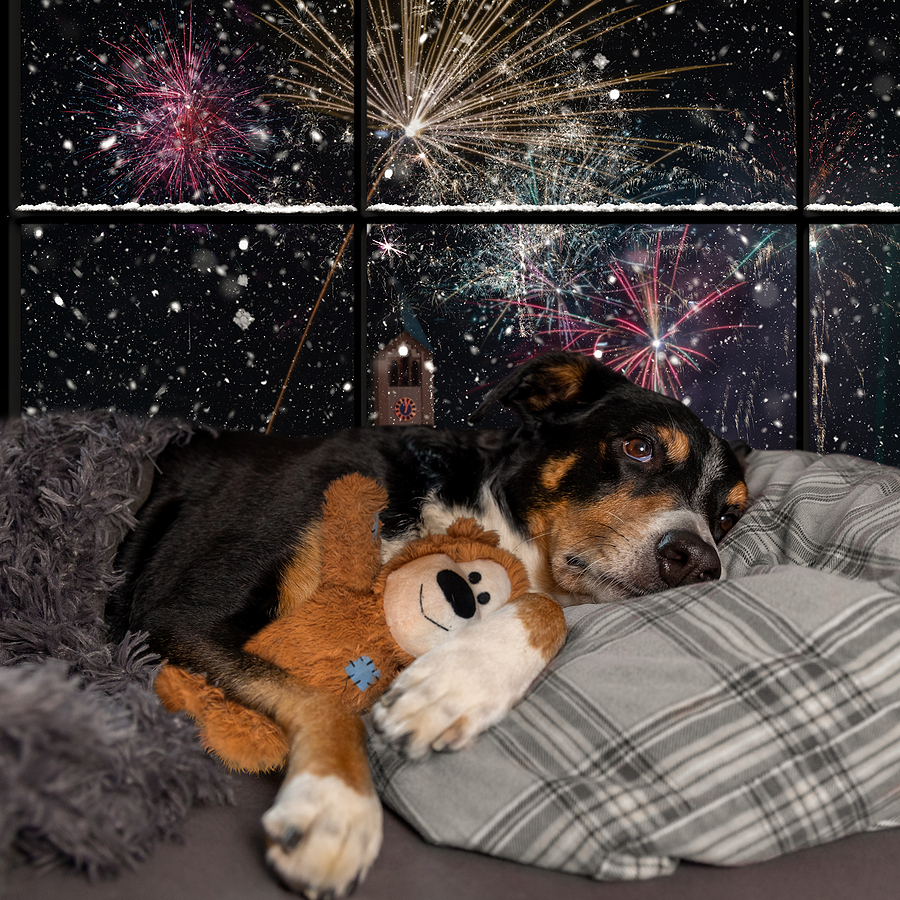
There’s sadly no way to explain to our pets that the persistent flashes and loud bangs of fireworks are not a sign of danger. Cats and dogs have hearing far superior to ours, which can make the bangs much more intense for them than they are for us.
Cats and dogs show fear in a variety of different ways. Running away, being more clingy, shaking, pacing and hiding behind furniture can all be signs that your animal is feeling distressed.
It might not be possible to eliminate all stressors for your pet on November 5th, but there are a few measures you can take to make sure they are as comfortable as possible.
- Walk your dog or let your cat out during the day so that you can keep them indoors at night
- Make a den with familiar toys and blankets where your pet can hide and find comfort if needed
- Close windows and doors to block out as much noise as possible
- Turn the TV or radio on to muffle the remaining sounds
- Draw the curtains to prevent intense flashes from fireworks
- Ensure your pet is in a safe environment and that they can’t escape if they panic, including taping up any cat flaps
- Maintain a calm and caring presence because your pets can be very attuned to your energy, and remaining calm will relax them in turn
- Never punish your pet for showing fear around fireworks because it’s a natural response, and getting upset with them will likely make things worse
Research has shown that the number of missing dogs often spikes dramatically on Bonfire Night. Cats, too, can panic and bolt in response to firework fear.
With this in mind, it is even more important to get your pet microchipped or update your pet’s microchip before November 5th rolls around.