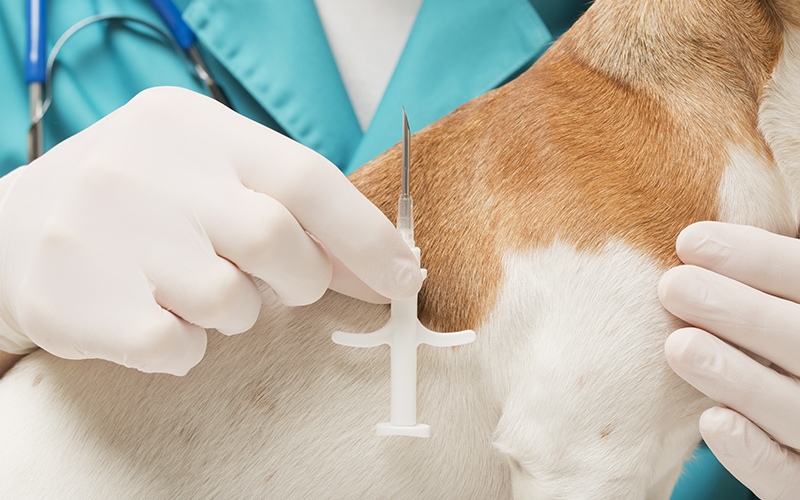
If you are planning to adopt a dog or cat this Christmas, it is vital to ensure they are fitted with a microchip registered with a recognised database. It is a very quick process, and your pet will feel practically nothing when the chip is implanted.
It is required by law for all dogs eight weeks or older and all cats 20 weeks or older to be microchipped, and if the animal shelter you adopted them from did not chip them, it is your responsibility as a pet owner to ensure that this is the case.
Of course, as with any trip to the vet, many pet owners will have that anxious feeling about whether the injection will hurt, but the reality is that for most dogs and cats, the process will not hurt more than a standard vaccination.
What Should You Expect From A Microchipping Session?
When a dog or cat is microchipped, a small chip the size of a grain of rice is implanted at the back of the neck between the shoulder blades.
The needle itself, therefore, is slightly larger than those used for routine vaccination, but the sensation is very similar for both. If your dog or cat barely notices their inoculations, they are unlikely to notice the microchip.
Vets typically consider a tiny pain response and a little bit of bleeding at the injection site to be normal, so if your dog yelps slightly, that is nothing to worry about.
They do not need their fur shaved, and they typically do not require sedation unless they are particularly needlephobic, although that can be an option if you ask your vet first. Pets can also be chipped during surgery if you already have a procedure planned.
After this, your pet can go home. In most cases, all your pet needs is a little treat. If you have any concerns, contact your vet afterwards.